The Ascendant position in the horoscope, method of calculation, and their meanings.
September 20, 2026
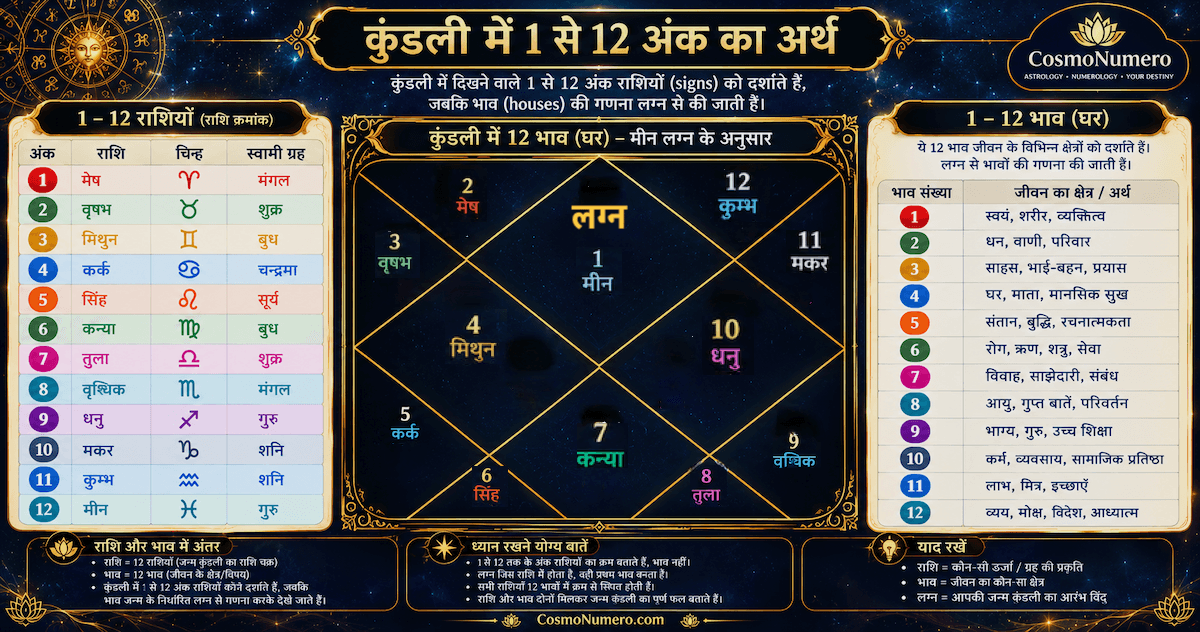
Understand what houses are in a birth chart, and what each house represents The 12 houses are among the most crucial parts of your birth chart. Aside from your Sun sign, these houses reveal how different areas of your life—such as relationships, career, and identity—take shape. The sequence of houses in a birth chart begins with your Ascendant, which is also called your rising sign. This represents your personality and your first impression. The Ascendant is the zodiac sign that was rising on the horizon at the exact time of your birth. This is the first house of your birth chart. Moving counter-clockwise from here, you progress to the second, third, fourth, and subsequent houses. Astrology is about much more than just your Sun sign. When you begin to study astrology beyond the Sun sign, you quickly learn that it encompasses many elements. These range from the Moon in your birth chart (which represents your emotions and inner self) to the Part of Fortune (which indicates your potential for success and happiness). Looking at the boundary of each house, you will see a zodiac sign at the edge of every house (astrologers call this the cusp of the house). These signs mark the beginning of each house and provide vital information about that house's energy. For example, if the cusp of your eleventh house is in Cancer, it means your friends are like family to you. Angular Houses: Angular houses are considered the most important. Houses 1, 4, 7, and 10 are angular houses. They form the foundation of your life. Each house has a distinct name: Ascendant (AC), Imum Coeli (IC), Descendant (DC), and Midheaven (MC). The Ascendant represents your self-image, the Imum Coeli your family, the Descendant your relationships, and the Midheaven your career and public life. These houses are ruled by the four cardinal signs—Aries, Cancer, Libra, and Capricorn—which add an element of action to each house. Succedent Houses: The next set of houses (2, 5, 8, 11) is ruled by the fixed signs: Taurus, Leo, Scorpio, and Aquarius. Their energy is solid, stable, and related to security. Cadent Houses: Cadent houses (3, 6, 9, 12) are ruled by the mutable signs: Gemini, Virgo, Sagittarius, and Pisces. Their energy is adaptable and associated with endings. What if a house is empty? Now, what happens if a house is empty and no planet is placed in it? Do not worry; this does not mean nothing is happening in that area of your life. It simply means that specific area might not be as much of a focal point for you. Keep in mind that the sky is always in motion, and planetary transits will eventually influence every house in your chart. When this happens, themes related to that house come to the forefront. For example, if your ninth house is empty, you might embark on more adventurous travels when Jupiter transits through that house. There are 12 houses in a birth chart through which a person's entire life can be mapped out. A house is also referred to as a Ghar(Home) or Khana(blocks). The planetary lord of the zodiac sign sitting in a house becomes the owner or ruling planet of that house. 1. First House: Ascendant House, Self-Image The first house, also known as your Ascendant or Rising Sign, reveals a person's character, temperament, and physical appearance. It is connected to your public image—this is how the world perceives you. It reflects how you present yourself, from your personal style to your mannerisms. 2. Second House: Wealth and Values The second house represents wealth, speech, and early education; it is also called the Dhan Bhava (House of Wealth). It relates to your money, resources, and core values. It shows how you earn, save, or spend money. If you experience issues related to self-esteem, they manifest here as well. 3. Third House: Mind and Communication The third house signifies younger siblings, courage, effort, and valor; it is also known as the Parakram Bhava (House of Courage). It represents your way of thinking, learning, and speech. It is also associated with primary education, short travels, and neighbors. 4. Fourth House: House of Happiness, Roots, and HomeThe fourth house is called the Sukha Bhava (House of Happiness). This house reflects your early upbringing, family, and home environment. It is your foundation or root system. Your preferences in housing and your relationship with your mother are reflected here. This house is used to analyze matters regarding mother, vehicles, and property. 5. Fifth House: Creativity and Children The fifth house governs higher education, children, and romantic love; it is also called the Santan Bhava (House of Children). This house rules over everything you create, whether it is your artwork, books you write, or your offspring. It is the house of self-expression and romance. True love, mentorship, sports, leisure, fame, speculation, the stock market, and gambling are all subjects related to the fifth house. 6. Sixth House: Work and Health The sixth house is used to analyze enemies, illnesses, and competitions; it is also known as the Shatru Bhava (House of Enemies). This house can provide insights into the type of work you do and your method of doing it. It is also your health sector, meaning signs related to your physical well-being and daily routine are found here. 7. Seventh House: House of Marriage, Relationships The seventh house is the house of marriage. This house is used to analyze your life partner and any type of partnership in your life. It is connected to all your relationships, whether in business, marriage, or anything in between—even your enemies. Legal matters and public relations also fall under the domain of the seventh house. 8. Eighth House: Relations and Shared Resources The eighth house governs sudden events in life, secrets, occult sciences, and accidents. Also known as the house of transformation, it focuses on everything that we share: debts, wills, alimony, inheritance, and interpersonal bonds. It is also associated with death. 9. Ninth House: Expansion and the Higher Mind The ninth house signifies religion, mentors (Gurus), knowledge, fortune, and long-distance travel; it is also called the Bhagya Bhava (House of Fortune). This house shows how you expand your horizons. Whether you like to travel, invest in higher education, or meditate in temples and ashrams—it all manifests here. The ninth house is deeply connected to spirituality, philosophy, and publishing. 10. Tenth House: Reputation and Career The tenth house is called the Karma Bhava (House of Action). This house is used to analyze an individual's profession and their father. It relates directly to career and reputation. It shows how high you can rise or how low you might fall. It is the house of fame, recognition, and public visibility. 11. Eleventh House: Social Life and Goals The eleventh house is the house of gains. It is used to look at income, all kinds of achievements in life, elder siblings, and friends. In this house, you can find indications about your friends and social circles—whether you prefer to be part of a large group or to remain alone. The eleventh house also sheds light on your goals and the ways you achieve them, including the people who help you along the way. 12. Twelth House: The Inner World and Self-Undoing The twelth house is the house of loss. It is used to analyze all types of losses in life, expenses, and foreign travel. This house represents your subconscious mind, introspection, and privacy. It is also connected to secrets, prisons, and hospitals. The term 'self-undoing' refers to how we unconsciously undermine ourselves or our goals. It is the place where your subconscious processes problems and where you tend to retreat to hide. Your hidden enemies are also found here. ✨Understanding the correct relationship between the houses and zodiac signs of the Ascendant is the first step toward a deep and systematic study of the birth chart.